

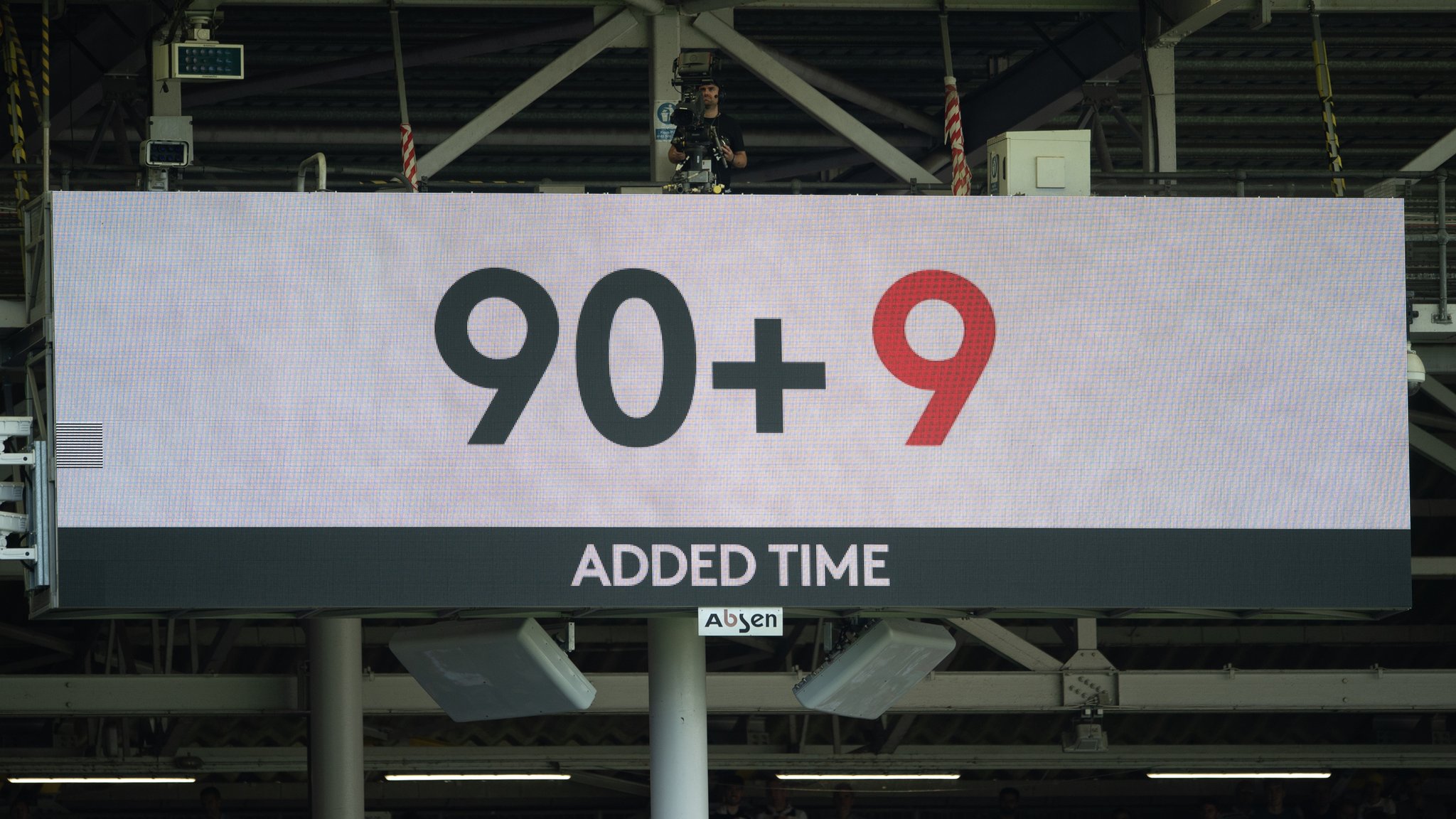
Goals scored in stoppage time are not random moments of chaos in the Premier League. Teams that repeatedly find the net after the 90th minute do so because of structural preparation, psychological resilience, and deliberate late-game behaviors. These goals emerge when pressure, fatigue, and decision-making intersect, creating conditions that some teams are specifically built to exploit.
Why Stoppage Time Is a Unique Scoring Phase
Stoppage time compresses urgency into a narrow window. Defensive concentration drops, spacing stretches, and referees allow advantage more readily. The cause is accumulated fatigue and time pressure; the outcome is fragmented defensive structure; the impact is a sudden increase in high-risk situations inside the penalty area. Teams that anticipate these conditions approach the final minutes differently from the rest of the match.
Tactical Escalation After the 85th Minute
Teams that score late rarely wait until added time to change behavior. They escalate pressure earlier, increasing cross volume, box occupation, and second-ball presence. The cause is proactive time management; the outcome is sustained territorial dominance; the impact is opponents defending deeper than planned by the time stoppage begins. This preparation phase often determines whether late pressure becomes productive or desperate.
Set-Piece Emphasis Under Fatigue
Stoppage time amplifies the value of set pieces. Defensive marking deteriorates as legs tire and communication fades. Teams that score late often engineer repeated corners and wide free kicks in the final minutes. The cause is targeted delivery strategy; the outcome is repeated aerial contests; the impact is higher probability of rebounds, deflections, or untracked runners converting close-range chances.
Psychological Belief and Collective Urgency
Late goals are closely tied to belief systems. Teams accustomed to scoring late do not panic when trailing or drawing. They maintain structure while increasing tempo. The cause is psychological conditioning;
