

Football (soccer) is the king of sports, attracting billions of fans worldwide. To ensure each match is fair, exciting, and professional, FIFA has established a rigorous system of rules for 11-a-side football. Understanding these rules is crucial.The latest FIFA rules for 11-a-side football.This not only helps players compete according to the rules but also helps viewers gain a deeper understanding of what’s happening on the field.
In the modern era of football, with the support of VAR technology, many regulations have been adjusted to increase transparency and fairness. Therefore, fans following these leagues…Xoilac TV There is also increasing interest in the official FIFA rules of the game to better understand referee decisions.
What are the latest FIFA rules for 11-a-side football?
The Laws of 11-a-side Football are a set of rules issued by FIFA and IFAB to apply to all professional football matches worldwide. These rules fully regulate everything from pitch dimensions and player numbers to playing attire, fouls, and penalties.

The Laws of 11-a-side Football are the rules of the game issued by FIFA and IFAB.
Currently, FIFA regularly updates and adjusts the rules to keep pace with the rapid development of modern football. The latest changes mainly relate to VAR, handball rules, substitutions, and how to handle controversial situations.
For football fans who regularly follow major tournaments at highlight bóng đá đêm qua Understanding the rules of the game will make the experience of watching football much more enjoyable and in-depth.
Regulations regarding the playing field in 11-a-side football.
FIFA standard pitch dimensions
According to The latest FIFA rules for 11-a-side football.The playing field must be rectangular with the following specific dimensions:
- The length of the field ranges from 90m to 120m.
- The width of the field ranges from 45m to 90m.
For international matches, the standard sizes usually applied are:
- The length ranges from 100m to 110m.
- The width ranges from 64m to 75m.
The pitch must be level and covered with natural grass or artificial turf that meets FIFA standards.
The goal area and penalty box
The goal area is defined as a 5.5-meter extension from each goalpost perpendicularly into the field. This is where the goalkeeper typically takes the kick-off.
The penalty area, or penalty box, is defined as the area extending 16.5 meters from the goalposts into the pitch. Any direct foul by the defending team within this area results in a penalty kick.
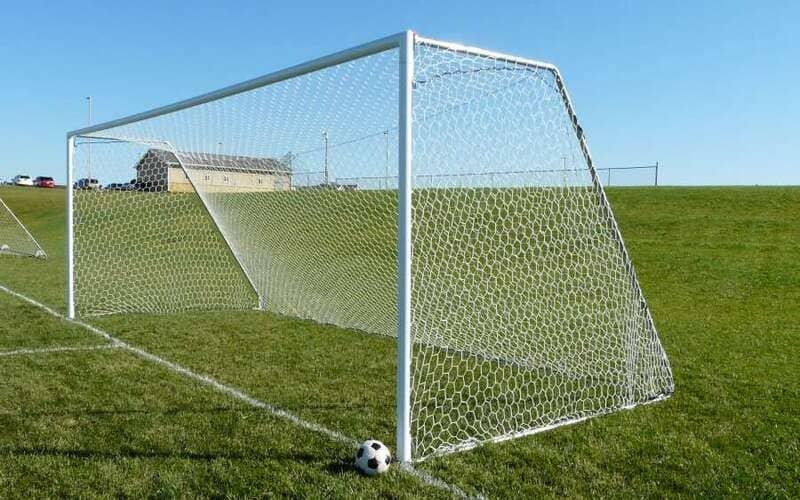
The goal area is defined as extending 5.5 meters perpendicularly into the field from each goalpost.
Standard goalposts
The goalposts are 7.32m wide and 2.44m high. The goal nets must be securely attached so as not to obstruct the goalkeeper.
When watching live matches atCa Khia TVSpectators often witness situations where the ball goes close to the goal line, and goal-line technology is used to determine the goal.
Regulations regarding the number of players
How many players are on each team?
In The latest FIFA rules for 11-a-side football.Each team can register a maximum of 11 official players, including:
- 1 goalkeeper
- 10 players who play in different positions
A match can only begin when each team has at least 7 players on the field.
Latest substitution rules
Previously, teams were only allowed a maximum of three substitutions. However, FIFA now permits a maximum of five substitutions during regular time.
Substitutions should be made within a maximum of three substitutions to avoid causing too much disruption to the match.
Many major tournaments are broadcast onCakhia TVSubstitution tactics are becoming an extremely important factor in helping coaches rotate their squads more effectively.

FIFA currently allows a maximum of five substitutions during regular time.
Rules for starting and continuing the game
First kick-off
The team that gets to kick off will be decided by a coin toss from the referee. The ball is placed in the center of the field, and opposing players must stand at least 9.15 meters away from the ball.
After the opening whistle, the ball must be kicked and clearly move to be considered in play.
Out of play
The ball is considered out of play when:
- The ball goes out of bounds, either on the end line or the touchline.
- The referee blew the whistle to stop the game.
At all other times, the ball is considered in play, even if it hits the post, crossbar, or the referee.
Offside rule in 11-a-side football
What is offside?
This is one of the most confusing rules for newcomers to football. A player is considered offside when:
Standing closer to the opponent’s goal than the ball and being the last defender at the moment a teammate passes the ball.
However, a player is only penalized if they were involved in the play.
Cases where it is not offside
A player is not offside if they receive the ball from:
- Throw-in
- Corner kick
- The serve
FIFA currently uses VAR technology to help determine offside situations with centimeter accuracy. Viewers atCakhiaTVIt is common to see many goals disallowed after VAR checks for offside.
Common fouls in football
Free-kick foul
This is a serious foul and the opposing team will be awarded a free kick. Some common fouls include:
- Kicking or intentionally kicking the opponent.
- Pushing people
- Dangerous tackle
- Pulling up shirt
- Playing ball with hands
If a foul occurs inside the penalty area, it will result in a penalty kick.
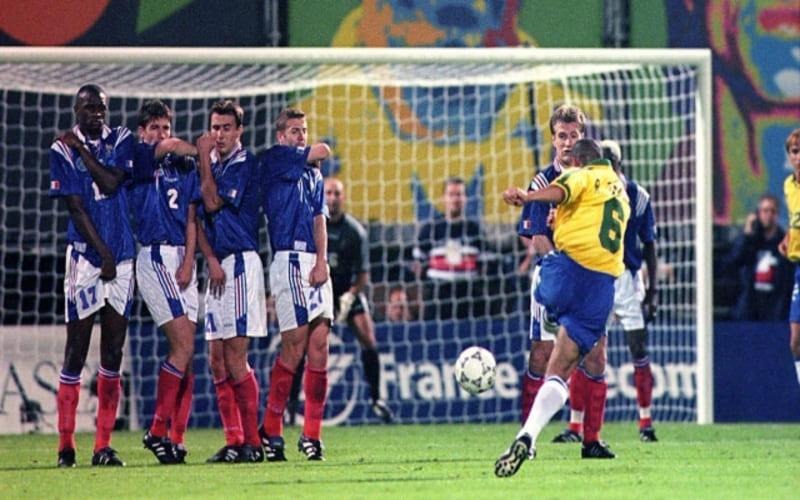
This is a serious foul and the opposing team will be awarded a free kick.
Indirect free-kick foul
The opposing team is awarded an indirect free kick when fouls occur such as:
- The goalkeeper held onto the ball for too long.
- Blocking the opponent without the ball.
- Playing dangerous football but without any contact.
A goal is only allowed if the ball touches another player before going into the net.
Penalty rules
Regulations for implementing penalty kicks
The ball is placed at the 11-meter mark. The goalkeeper must stand on the goal line until the player shoots the ball. Other players must stand outside the penalty area and at least 9.15 meters away from the penalty spot.
The latest changes
In The latest FIFA rules for 11-a-side football.The rules for goalkeepers saving penalties are now being tightened. Goalkeepers are not allowed to move both feet off the goal line before the ball is kicked. VAR is also being used to check for fouls during penalty kicks.
Types of yellow/red cards in football
Yellow card
A player receives a yellow card when:
- Reaction to the referee
- Stall for time
- Take off your shirt to celebrate.
- Tactical foul
Two yellow cards in the same match will result in a red card.
Red card
A player receives a direct red card if:
- Serious offense
- Cold strike
- Preventing a goal with your hand.
- There was violent behavior.
When a player receives a red card, they must leave the field immediately, and the team has to play with ten men. Controversial red card situations are always a hot topic of discussion.Cà Khia TVafter every big game.
Throw-in rules
When the ball goes out of bounds along the sideline, the team that didn’t touch the ball last gets the right to take a throw-in.
The player taking the right throw-in:
- Use both hands
- Pass the ball from behind your head.
- Both feet touching the ground or standing on the sideline.
If the throw-in is executed incorrectly, the right to throw-in will go to the opposing team.
Corner kick rules
A corner kick occurs when the defending team touches the ball last before it goes out of bounds. The ball is placed within the corner arc, and opposing players must stand at least 9.15 meters away.
This is an extremely dangerous attacking opportunity in modern football, with many diverse tactical combinations.
Serving rules
When the attacking team sends the ball out of bounds, the goalkeeper or a player from the defending team will take a goal kick. The ball is placed in the goal area and must leave the penalty box to be considered in play.
FIFA has now changed its rules to allow teammates to receive the ball inside the penalty area to speed up ball distribution.
Conclude
The latest FIFA rules for 11-a-side football.Understanding the rules regarding pitches, players, offside, penalties, and VAR plays a crucial role in ensuring fairness, excitement, and professionalism in the sport of football. A thorough understanding of these rules will help viewers follow and appreciate the game more deeply.
In the context of modern football, which is constantly changing, keeping up-to-date with FIFA rules is essential for both players and fans. If you are a football fan who regularly follows exciting tournaments, this is especially true if you are a football enthusiast who frequently follows the latest leagues.CakhiaTVCertainly, understanding the rules of the game will make the experience of watching football much more enjoyable and professional.
